

It is fairly typical in the summer to find that your home water system appears to be sweating; this is often due to a combination of high temperatures and moisture in the air which can condense on cool pipes. It is a mismatch between water temperature inside pipes and air temperature around the pipes. It can lead to water damage, growth of mold around your water system or safety hazards in the home.
As the owner of a water system, you should understand what causes pipes to sweat and consider effective methods of prevention to avoid repairs and danger in your home.
Why is the System Sweating?
Pipes begin to sweat when warm and humid air comes into contact with cool water pipes, which causes condensation to form on the surface of the pipes. Water droplets gathering on the pipes eventually cause water damage to the outside of pipes and their fixings, encourage mold to grow and cause safety hazards if you don’t rectify the problem.
The process of pipes sweating is very normal, but it does increase moisture in your home, which is not something that you want to encourage. Water droplets can damage the fixings of your plumbing or the surfaces they fall onto and gather on. If water droplets get into electrical wiring, they can become a fire or electrocution hazard.
Why is This a Problem?
Sweating pipes can cause water to drip onto surfaces around the pipework, leading to water damage and unsightly staining. Water can seep into carpets over time, causing a damp smell and damaging carpet fibers. Over time, water can destroy hardwood flooring by causing warping or swelling. Uncontrolled moisture can also ruin your wallpapered or painted walls.
Increased moisture in poorly ventilated areas can encourage mold and mildew to grow in your home. The spores from these can be dangerous for asthma sufferers, as well as causing flare-ups of skin conditions, headaches and nausea in many people. Mold remediation is not cheap, so is something to avoid if at all possible.
Water droplets should never mix with electrical wiring: this may cause a fire hazard or lead to fatal electrocution.
Moisture from sweating pipes creates slippery surfaces where it is easy to slip or fall. This is especially hazardous in poorly lit areas such as basements, which are very common places for pipes which may begin to sweat.
How to Eliminate Sweating Pipes
The best way to prevent your pipes sweating is to ensure that they are properly insulated, just as you would with preventing pipes from freezing underground. Pipe insulation can be purchased from hardware stores and comes in a variety of materials (you can check with a store employee or a plumbing professional, which material is best for your situation.)
Make sure that you accurately measure the circumference of your pipes before purchasing insulation, as it comes in a selection of sizes and the wrong size will not protect your pipes effectively.
Insulation should be cut to size and secured to the pipes to prevent moisture condensing on the outside of the pipe. Insulation gives a barrier between the cold pipes and warm air that causes sweating. A dehumidifier may be a useful purchase if pipe sweating is a recurrent issue in your home.
Sweating Pipes vs Condensation
People often describe their pipes as ‘sweating’ but this is simply the appearance of condensation, a scientific process where moisture in warm air comes into contact with a cold surface and cools rapidly, condensing into water droplets. On pipes, this water collects on the outside of pipes, giving the appearance of sweating.
Though the term ‘pipe sweating’ is commonly used, it is a misnomer. The pipe itself is not producing water, it is just providing a surface for warm air to meet a cool surface and condense its moisture into water drops. It is not immediately dangerous, but it can damage flooring, drip through ceilings and encourage the growth of mold or mildew.
Excessive condensation may be masking a more significant leak in your plumbing, which is something to be mindful of. If there are wet patches persistently, then conduct a small test to see if you are dealing with surface condensation or a leak requiring repair.
Wipe the surface dry and observe the speed at which moisture reappears. Condensation or pipe sweating appears rapidly, whereas a minor to moderate leak takes time to reappear.
How to Stop Condensation on Your Pipes
Some condensation on pipes is normal, and unavoidable in warm climates, especially in the summertime. It demonstrates the temperature difference between the air and your water system. If you are experiencing a large amount of water outside the pipework, you may have a leak, and we encourage you to give us a call to check out your plumbing for a more severe issue.
If you have a water softener, you may find that insulating the tank, as well as the pipes, is an effective way to reduce condensation on your plumbing.
Keeping the area where tanks and pipes are present as well-ventilated as possible can help to prevent condensation and certainly prevent mold and mildew growth where condensation has happened previously.
Conclusion
When warm and humid air makes contact with cold water pipes, the moisture condenses into water droplets that gather on your pipes and give the appearance of sweating. Most commonly, this happens in basements and laundry rooms, which are likely not to be as well-ventilated as the rest of your home.
Consistent pipe sweating can lead to water damage in your home, growth of mold and mildew and slip hazards when there is excessive water present. You should be vigilant of your pipes and if they appear to be sweating, especially in summer when temperature differences are more apparent, then consider use of dehumidifiers and insulation to protect your plumbing and your home.
AquaClear Water Systems is well placed to serve you with any plumbing problems you have. But with our years of experience, we are also keen to share our expertise, which is why we invite you to talk with us about problems you experience with your pipework, which could include sweating or condensation.
We can help you find the solution and the right product to reach that solution faster. Contact us today to solve your problems with pipe sweating and condensation. If excess condensation or moisture around your plumbing is a recurring issue, you might also benefit from improving the overall quality of the water entering your home. Installing whole home water filter systems can help protect your plumbing and appliances by reducing mineral buildup, balancing water temperature consistency, and preventing corrosion that can worsen condensation problems. These systems also ensure every tap in your home delivers cleaner, safer, and better-tasting water.
Summer where are you? As much as we love every season, we’re looking forward to some sunshine and warmer weather over here at Aqua Clear. As the warmer months come along, we often get calls asking “Why is my water system sweating?”.
The beautiful East Tennessee area has HIGH levels of humidity. Ever been outside and felt sweaty, instantly? That’s the humidity sticking to you.
A water system is no different. When warm air hit a colder surface it creates condensation. Which is the “sweat” on your whole house water softening system.
The main thing to do is MOVE your leak alarms out of the pan, so the condensation doesn’t set them off. Once the weather changes you can add them right back.
That sweat pools up on the floor, and sets of your water alarms (if you have them). Text the word “Alarm” to (865) 252-4205 for instructions on how to turn off the water alarms. If you have gallons of water on the floor that is not condensation, but possibly a leak so call us immediately at 865-225-6555.
How To Stop Your Water Softener System From Sweat
Wrap your water system tanks with insulation. Wrap the pipes with insulation. Neoprene or foam are great materials to use. We do have tight neoprene sleeves, for certain size systems, we can order for you. You have to create a barrier from the warm air hitting the cold water in the tanks.
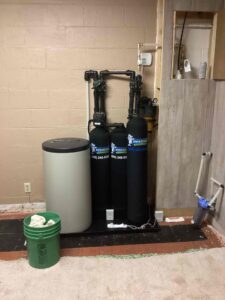
We also have plastic pans, sized for our water systems, that will keep the water from getting on the floor.
If you can keep the garage or crawlspace door closed that will help prevent hot/humid air from coming in. Also if you have a dehumidifier place it in your garage or crawlspace.
At Aqua Clear Water Systems, we pride ourselves on being the highest quality water filtration company in all of Tennessee.
Have any more questions? Don’t hesitate to call or text us @ 865-225-6555.Hope this helps,
The Aqua Clear Team